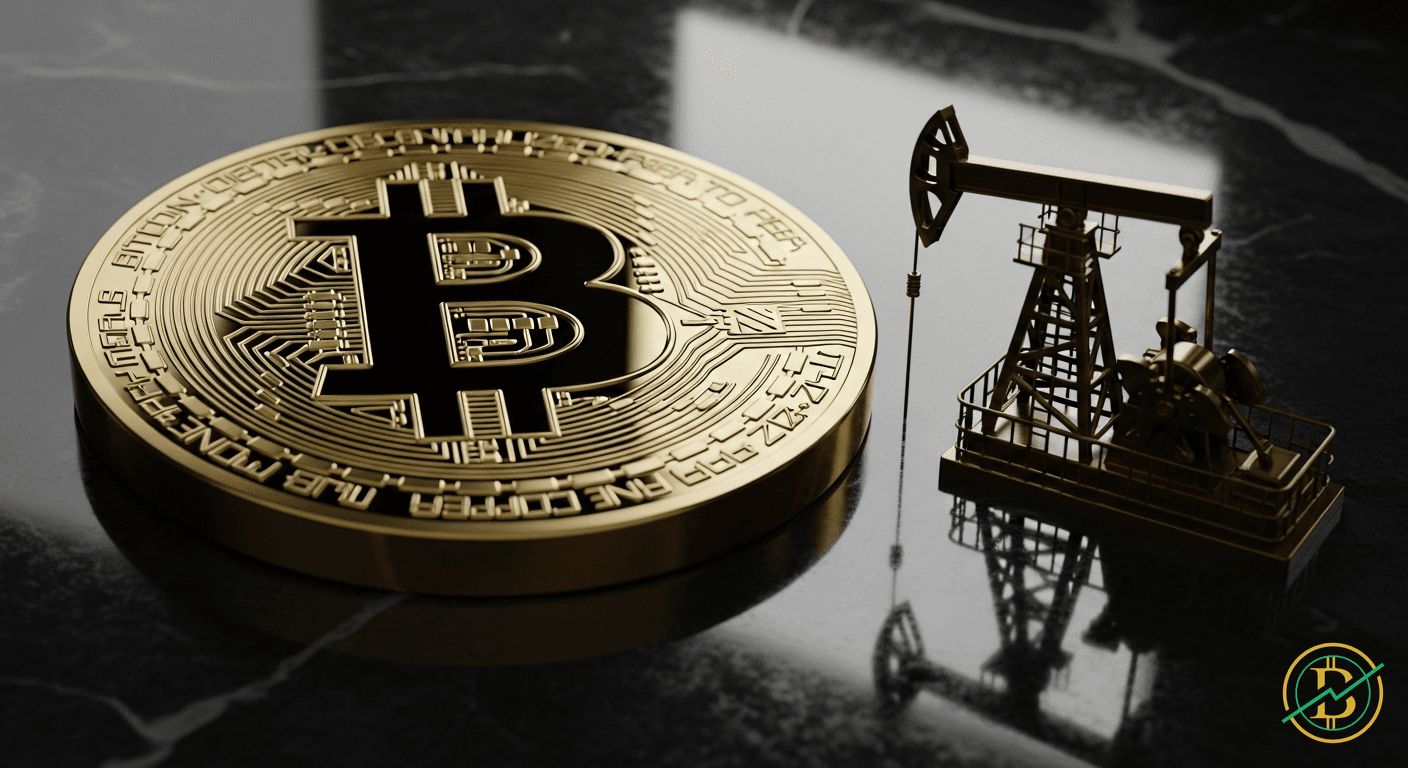
Bitcoin's Price Action Under Scrutiny Amidst Oil Market Volatility
Key Insights
- →Rising crude oil costs historically correlate with bearish sentiment in digital assets.
- →Investors are assessing Bitcoin's response to the current inflationary environment.
- →Potential for increased correlation between Bitcoin and broader macroeconomic trends.
What Happened?
The cryptocurrency market is closely watching the ongoing surge in global oil prices, as traders and analysts try to gauge its potential impact on Bitcoin (BTC) valuation. Crude oil has recently experienced significant upward momentum, driven by a confluence of geopolitical tensions, supply chain disruptions, and increased demand. This dynamic landscape has prompted a reassessment of Bitcoin’s position within the wider financial ecosystem, particularly concerning its perceived role as a hedge against inflation. Experienced crypto traders are meticulously analyzing Bitcoin’s price behavior and its correlation with other asset classes, including commodities like oil, to refine their trading strategies. The prevailing question is whether the digital asset will maintain its independence or succumb to the pressures of a potentially contracting global economy.
These developments have intensified scrutiny of Bitcoin’s ability to act as a safe haven asset and a store of value. Investors are evaluating whether Bitcoin can effectively insulate portfolios against the inflationary pressures often associated with elevated oil prices. The correlation between the two, or the lack thereof, is a key focus. The digital asset’s price sensitivity to broader macroeconomic trends is being closely monitored, with traders poised to adjust their positions based on emerging patterns. The market's reaction to rising energy costs could provide valuable insights into Bitcoin’s long term viability and its capacity to provide returns in a challenging economic landscape.
Background
Historically, there have been periods where significant rises in oil prices coincided with downward pressure on Bitcoin's price. Certain market cycles witnessed Bitcoin’s growth slowing during periods of rising oil costs and increased economic uncertainty. These periods often coincided with broader market corrections, impacting riskier assets, including cryptocurrencies. It’s important to note this is not always the case; there have been instances where Bitcoin has performed independently of oil price fluctuations. However, the potential for a relationship between these two seemingly disparate markets remains a point of interest for seasoned crypto traders.
The rise and fall of oil prices are often tied to global economic cycles, geopolitical events, and shifts in supply and demand dynamics. These factors can create ripple effects throughout the financial system, influencing investor sentiment and risk appetite. These broader macroeconomic factors are increasingly relevant for digital assets, and traders are actively evaluating Bitcoin's response to them. The evolution of Bitcoin’s role in a changing financial landscape means its price action will likely continue to be tied to multiple factors.
Market Impact
The current situation presents challenges for Bitcoin, with the potential to trigger market volatility and impact investor behavior. If oil prices continue their ascent, there is a possibility that Bitcoin could experience downward pressure, especially if broader economic concerns intensify. The extent of any impact will depend on various factors, including the severity of oil price increases, the prevailing investor sentiment, and Bitcoin's overall market strength. Traders are now monitoring key support and resistance levels, evaluating liquidity, and closely scrutinizing on chain metrics to anticipate potential price movements.
Looking ahead, the relationship between Bitcoin and oil prices could evolve. Increased awareness of global economic dynamics among crypto investors means greater market sensitivity. The cryptocurrency market is rapidly maturing, and its correlation with traditional markets is likely to increase. Therefore, understanding the potential interplay between Bitcoin and oil is critical for traders seeking to navigate the evolving crypto market landscape and make informed investment decisions. This situation highlights the need for continuous analysis and adaptation for those trading in the digital asset space.
⚡Trading Benefits
20% CashbackLifetime cashback on all your trades.
- 20% fees back — on every trade
- Paid out directly by the exchange
- Set up in 2 minutes
Affiliate links · No extra cost to you
20%
Cashback
Example savings
$1,000 in fees
→ $200 back
Related Articles
Bitcoin Navigates Geopolitical Tensions and Energy Scrutiny

Belgian Banking Giant Embraces Digital Assets with Innovative Trading Platform
Bitcoin's Scarcity Squeeze: Navigating the Final Mining Epoch
Bitcoin ETFs Surge as Institutional Interest Diverges from Altcoin Sentiment
Disclaimer
This article is for informational purposes only. The content does not constitute financial advice, investment recommendation, or solicitation to buy or sell securities or cryptocurrencies. Biturai assumes no liability for the accuracy, completeness, or timeliness of the information. Investment decisions should always be made based on your own research and considering your personal financial situation.