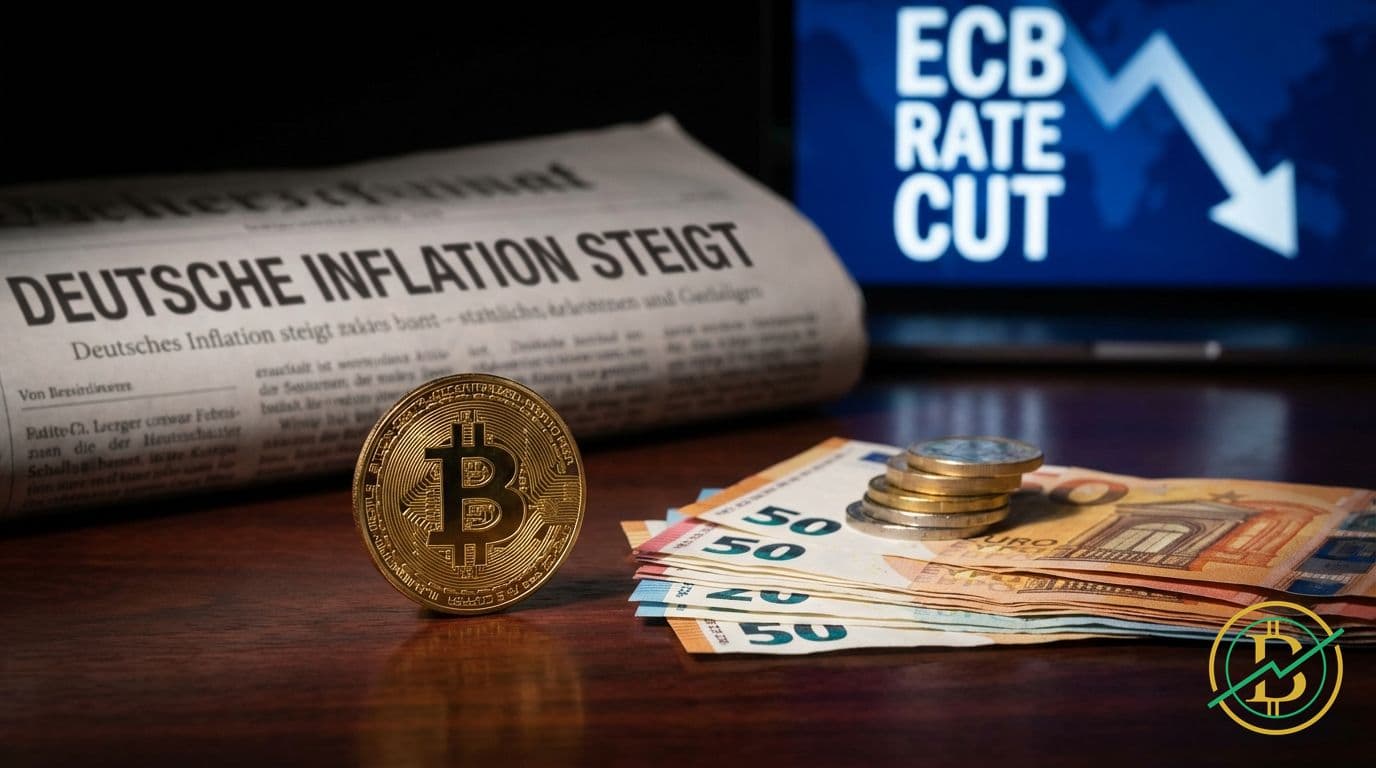
German Inflation Creeps Up Amidst ECB Rate Cuts: Implications for Cryptocurrency Markets
Germany's inflation rate saw a slight uptick recently, reaching 2.1% in January, according to official data released this week. This increase, climbing from 2% the previous month, arrives at a time when the European Central Bank (ECB) has once again opted to lower interest rates. This combination of rising prices and accommodative monetary policy warrants careful consideration by experienced cryptocurrency traders, as it has the potential to influence the broader economic landscape and, consequently, digital asset valuations.
The rise in inflation in Germany, the largest economy in the Eurozone, is primarily attributed to increasing costs across various sectors. While specific drivers haven’t been fully detailed in early reports, the persistent upward pressure on prices highlights concerns about maintaining price stability within the region. This is particularly relevant for those invested in cryptocurrencies, many of which are designed with deflationary properties in mind. As traditional fiat currencies potentially lose purchasing power, the appeal of assets that could maintain or increase value increases for some investors.
The ECB's continued rate cuts are a direct response to this economic environment. Central banks frequently implement this strategy to stimulate economic growth and boost spending. Lower interest rates typically make borrowing cheaper, encouraging businesses to invest and consumers to spend. However, this strategy can also contribute to inflationary pressures by increasing the money supply. This dynamic creates a complex environment for cryptocurrency investors.
The relationship between inflation, interest rates, and cryptocurrency prices is multifaceted. Some analysts suggest that Bitcoin price, for example, can act as a hedge against inflation. This is based on the limited supply of Bitcoin, making it potentially more resistant to the devaluation of fiat currencies. A rising inflation rate, coupled with declining interest rates, could potentially increase the appeal of Bitcoin and other cryptocurrencies as an alternative store of value. Conversely, an environment of high inflation and rate cuts can also lead to increased volatility in cryptocurrency markets as investors reassess their portfolios.
The implications of Germany’s inflation data extend beyond the Eurozone. The country is a significant player in the global economy. Trends in German economic performance often influence investor sentiment worldwide. Therefore, the recent data, combined with the ECB's rate decisions, requires constant monitoring from cryptocurrency traders globally.
Experienced crypto traders will analyze this data alongside other economic indicators, such as consumer confidence and employment figures. Furthermore, they will monitor the performance of major assets like Bitcoin price and Ethereum to assess any shifting correlation between traditional markets and the cryptocurrency space. The evolving interplay between German inflation, ECB policies, and the cryptocurrency market will continue to be a key area of focus for investors seeking to navigate the complexities of digital asset trading. Traders should also consider how this could affect the price of altcoins and the cryptocurrency market as a whole.
⚡Trading Benefits
20% CashbackLifetime cashback on all your trades.
- 20% fees back — on every trade
- Paid out directly by the exchange
- Set up in 2 minutes
Affiliate links · No extra cost to you
20%
Cashback
Example savings
$1,000 in fees
→ $200 back
Disclaimer
This article is for informational purposes only. The content does not constitute financial advice, investment recommendation, or solicitation to buy or sell securities or cryptocurrencies. Biturai assumes no liability for the accuracy, completeness, or timeliness of the information. Investment decisions should always be made based on your own research and considering your personal financial situation.