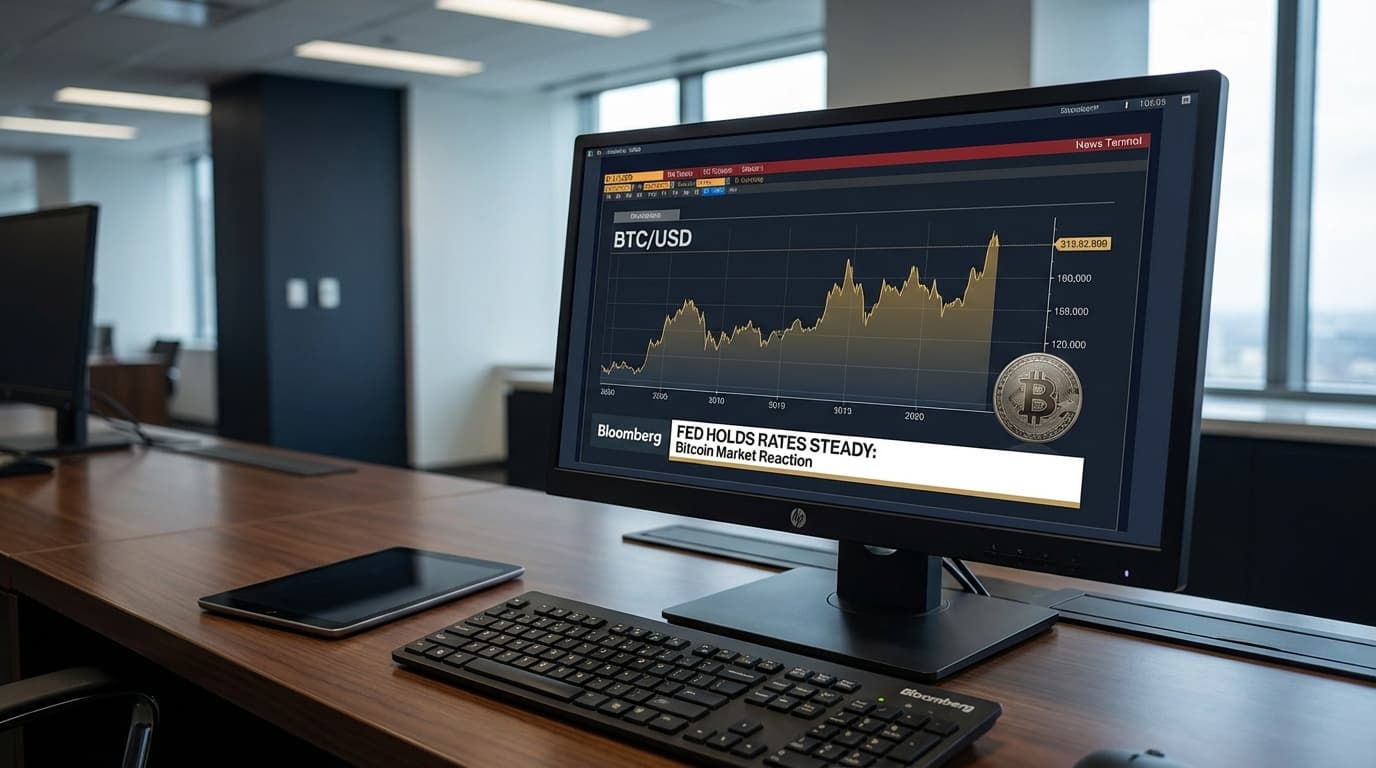
Federal Reserve Holds Steady: Assessing the Impact on Bitcoin and Broader Cryptocurrency Markets
The Federal Reserve, through its Federal Open Market Committee (FOMC), has opted to maintain the current federal funds rate, holding it steady within the 3.5% to 3.75% range. This decision, aligning with the consensus market forecast, has significant implications for experienced cryptocurrency traders, particularly concerning the Bitcoin price and the overall health of the digital asset landscape. The FOMC’s strategy, as guided by Chairman Jerome Powell, is under intense scrutiny as investors assess its potential to influence market liquidity and risk appetite.
This pause in potential rate cuts, as the market anticipated, comes at a critical juncture. The macroeconomic environment presents a complex interplay of factors, including inflation metrics, employment data, and global economic performance. The Fed’s careful approach reflects a desire to balance economic stability with the potential for further tightening or loosening of monetary policy. For seasoned crypto traders, these decisions are not merely abstract economic pronouncements; they are critical inputs for forecasting volatility and making informed investment choices.
The immediate impact on Bitcoin, and by extension, the altcoin market, is worth close analysis. Historically, periods of monetary easing, such as rate cuts or quantitative easing, have often correlated with increased risk-on sentiment in financial markets. This can lead to increased investment in higher risk assets, including cryptocurrency. Conversely, a prolonged period of stable or rising interest rates can diminish the attractiveness of riskier investments, potentially creating headwinds for the Bitcoin price.
Currently, the cryptocurrency market displays a mixed sentiment. While Bitcoin continues to be the dominant force, the activity of the institutional investors and retail traders is a key factor. An environment where the Fed maintains rates at their current levels could foster continued cautiousness, with traders carefully evaluating their strategies. Bitcoin’s performance will be heavily influenced by several factors, including regulatory developments, institutional adoption, and the overall narrative surrounding cryptocurrency’s role in the global financial system.
Furthermore, the decision directly impacts the cost of capital for businesses and individuals engaged in the cryptocurrency ecosystem. Higher interest rates can make it more expensive for companies to secure funding for development projects or expansion initiatives, potentially slowing innovation and investment in the sector. Conversely, a stable rate environment may encourage more stability.
Experienced cryptocurrency traders should closely monitor the FOMC’s future meetings and any communications from Chairman Powell. Any shift in the Fed's stance, whether it be hints of future rate adjustments or changes to its inflation targets, will trigger market reactions. Understanding the correlation between monetary policy and the performance of digital assets is crucial for navigating the evolving landscape. The ability to anticipate these impacts can provide a significant advantage in the complex world of cryptocurrency trading.
⚡Trading Benefits
20% CashbackLifetime cashback on all your trades.
- 20% fees back — on every trade
- Paid out directly by the exchange
- Set up in 2 minutes
Affiliate links · No extra cost to you
20%
Cashback
Example savings
$1,000 in fees
→ $200 back
Related Articles
Significant Bitcoin Accumulation Signals Potential Price Stability

Bitcoin's Role in the Emerging Artificial Intelligence Landscape: A Strategic Assessment

Bitcoin Fortune Battle: UK Man Accuses Wife of Crypto Heist
Bitcoin's Consolidation Phase: Wintermute's Insights on Key Indicators
Disclaimer
This article is for informational purposes only. The content does not constitute financial advice, investment recommendation, or solicitation to buy or sell securities or cryptocurrencies. Biturai assumes no liability for the accuracy, completeness, or timeliness of the information. Investment decisions should always be made based on your own research and considering your personal financial situation.