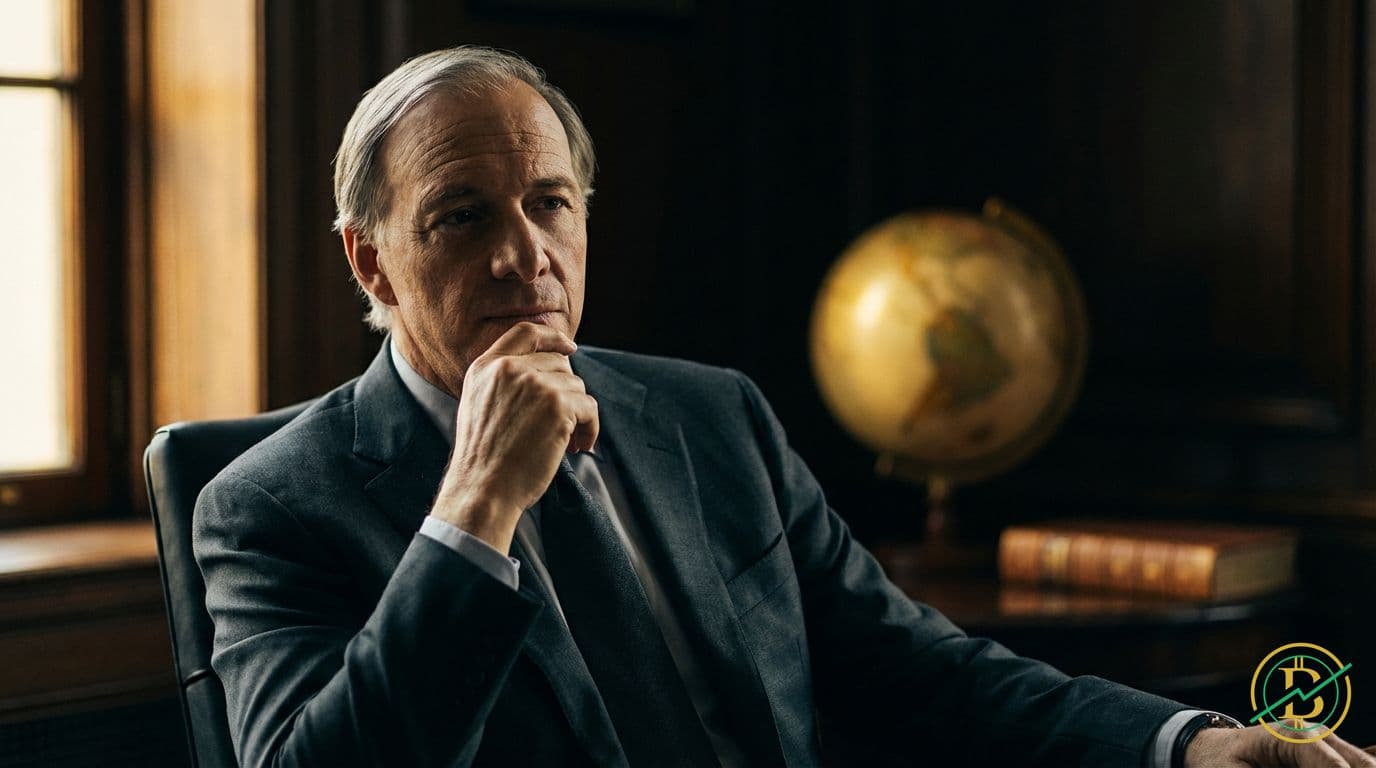
Examining Ray Dalio's Skepticism Regarding Bitcoin's Gold Standard Aspirations
Key Insights
- →Ray Dalio questions Bitcoin's capacity to supplant gold as a safe haven asset.
- →Dalio highlights factors such as central bank holdings and market stability.
- →Bitcoin's volatility and risk asset correlation are key concerns for Dalio.
What Happened?
Prominent investor Ray Dalio, founder of Bridgewater Associates, has voiced reservations regarding Bitcoin's potential to fully usurp gold's position as a premier store of value. His analysis, reflecting a nuanced perspective on the ongoing digital asset evolution, suggests that Bitcoin faces significant hurdles in its quest to become a universally accepted financial bedrock. Dalio's arguments center on fundamental differences between the two assets, considering elements that contribute to gold's enduring appeal in the investment landscape. He has publicly stated that Bitcoin's current characteristics do not align with the attributes needed to completely replace gold, especially in times of global economic uncertainty. His perspective underscores the complexities surrounding the integration of digital currencies into established financial structures and highlights the differing roles of traditional versus emerging assets.
Dalio's skepticism isn't a blanket dismissal of Bitcoin. Rather, it offers a crucial framework for evaluating its trajectory. His insights are particularly relevant to experienced crypto traders who closely monitor market dynamics and seek to understand the underlying drivers of asset valuations. This type of analysis emphasizes the importance of a well rounded understanding of the market. Dalio's observations encourage a more critical assessment of Bitcoin's current market behavior and its relationship with established, traditionally safe haven assets like gold.
Background
Gold has served as a primary store of value for centuries, a status solidified by its relative scarcity, widespread acceptance, and intrinsic properties that have historically preserved its value during periods of economic instability. Central banks worldwide hold significant gold reserves, viewing it as a critical component of their financial stability strategies. This institutional backing, combined with its long history, has contributed to gold's perceived safety and liquidity. Bitcoin, on the other hand, is a relatively new asset, still navigating the complexities of market maturity and regulatory uncertainty. Although its proponents champion its decentralized nature and capped supply as advantages, it remains subject to significant price volatility and market sentiment fluctuations. The differing time frames of their existence also contribute to their market positions.
The comparison between gold and Bitcoin is often drawn within the context of their potential to hedge against inflation and economic downturns. While both assets share some characteristics in this regard, their responses to market pressures and external economic influences often diverge. Dalio's observations are rooted in these differences, pointing out that Bitcoin's behavior often mirrors that of a risk asset, reacting strongly to changes in investor sentiment and economic outlook. Gold, in contrast, tends to exhibit more stability during periods of market stress, making it a reliable refuge for institutional and individual investors.
Market Impact
Dalio's assessment contributes to a broader discussion among institutional investors and crypto traders about the role of Bitcoin within a diversified portfolio. His insights serve as a reminder that Bitcoin's investment profile is still evolving. Currently, the market appears to price Bitcoin more as a risk asset than a safe haven, and this distinction is pivotal for portfolio construction. This perspective underscores the need for a comprehensive understanding of risk management, particularly for those deploying capital in volatile markets. Experienced traders will likely use Dalio's statements to inform their risk management practices.
Ultimately, the market impact of Dalio's views depends on investor interpretation and behavior. While his skepticism may not drastically alter Bitcoin's trajectory, it could influence the expectations surrounding its short term price movements and its integration into traditional financial instruments. Bitcoin's correlation with other risk assets, as opposed to its potential as a safe haven, remains a crucial factor. His analysis provides a valuable lens through which traders can assess Bitcoin's ongoing evolution and its place in the broader financial landscape.
⚡Trading Benefits
20% CashbackLifetime cashback on all your trades.
- 20% fees back — on every trade
- Paid out directly by the exchange
- Set up in 2 minutes
Affiliate links · No extra cost to you
20%
Cashback
Example savings
$1,000 in fees
→ $200 back
Related Articles



Disclaimer
This article is for informational purposes only. The content does not constitute financial advice, investment recommendation, or solicitation to buy or sell securities or cryptocurrencies. Biturai assumes no liability for the accuracy, completeness, or timeliness of the information. Investment decisions should always be made based on your own research and considering your personal financial situation.