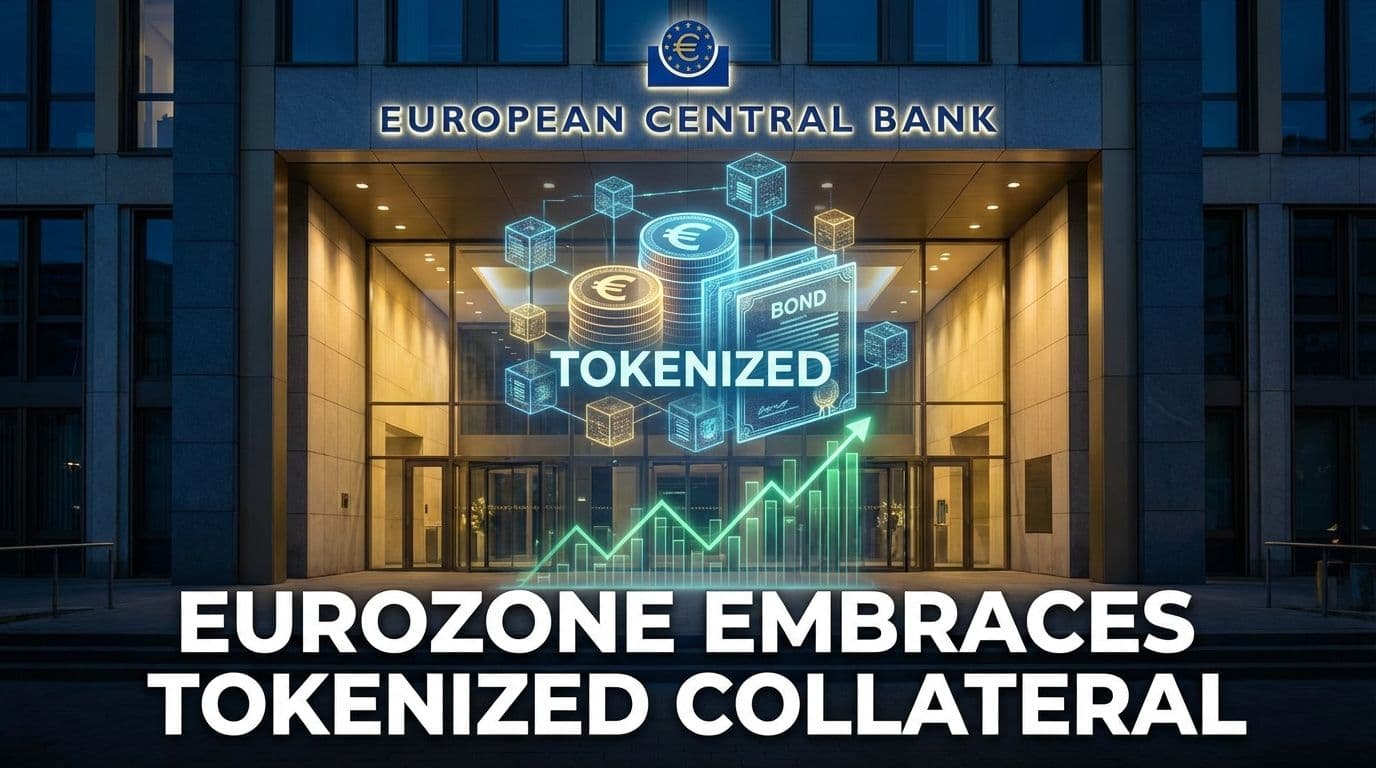
Eurozone Embraces Tokenized Collateral Paving Way for Institutional Crypto Adoption
The European Central Bank’s (ECB) Eurosystem has taken a significant step forward, opening the door for tokenized assets to be used as collateral. This pivotal decision marks a clear shift in the institution's view of blockchain technology, signaling a move beyond mere experimentation and toward integration within the core financial infrastructure of the Eurozone. For seasoned cryptocurrency traders, this is a development worthy of close scrutiny, as it potentially unlocks a new era of institutional participation and liquidity within the digital asset space.
The core of this decision lies in collateralization. In traditional finance, collateral represents the assets a bank pledges to secure loans from a central bank. This provides a crucial safety net for the financial system, ensuring that lenders have recourse in case of borrower default. Historically, such collateral has been predominantly in the form of conventional assets like government bonds or highly rated corporate debt. The Eurosystem’s move, however, expands the accepted collateral pool to include tokenized assets.
This evolution is particularly relevant for the cryptocurrency market. The acceptance of tokenized assets as collateral by a central bank validates the concept of tokenization itself. It implies that these digital representations of value are gaining credibility and recognition as legitimate financial instruments within the established financial framework. For cryptocurrency traders, this can translate to several significant implications. First, it potentially increases the demand for tokenized assets, which could support their value. Second, it could improve liquidity within the broader cryptocurrency ecosystem as traditional financial institutions become more comfortable interacting with tokenized assets.
The move also offers the potential for enhanced operational efficiency. Tokenization streamlines processes, allowing for faster settlement times and reduced counterparty risk. The use of blockchain technology provides increased transparency and auditability, allowing regulators and market participants to monitor collateral more effectively. This enhanced transparency is particularly attractive to institutional investors who are often wary of the opacity sometimes associated with traditional financial instruments.
Moreover, the Eurosystem's decision sets a precedent for other central banks around the globe. As the Eurozone is a major financial hub, other regulators might follow suit, accelerating the adoption of tokenized assets globally. This could lead to a more interconnected and efficient global financial system, where digital assets play a more prominent role.
For experienced cryptocurrency traders, this development presents an opportunity to reassess their investment strategies. It is essential to monitor which assets are being approved as collateral, the specific rules and regulations that apply, and how this could impact market dynamics. The integration of tokenized assets into the Eurozone’s financial plumbing is a significant step forward, indicating a maturing ecosystem and providing new avenues for institutional capital to enter the cryptocurrency market.
⚡Trading Benefits
20% CashbackLifetime cashback on all your trades.
- 20% fees back — on every trade
- Paid out directly by the exchange
- Set up in 2 minutes
Affiliate links · No extra cost to you
20%
Cashback
Example savings
$1,000 in fees
→ $200 back
Disclaimer
This article is for informational purposes only. The content does not constitute financial advice, investment recommendation, or solicitation to buy or sell securities or cryptocurrencies. Biturai assumes no liability for the accuracy, completeness, or timeliness of the information. Investment decisions should always be made based on your own research and considering your personal financial situation.