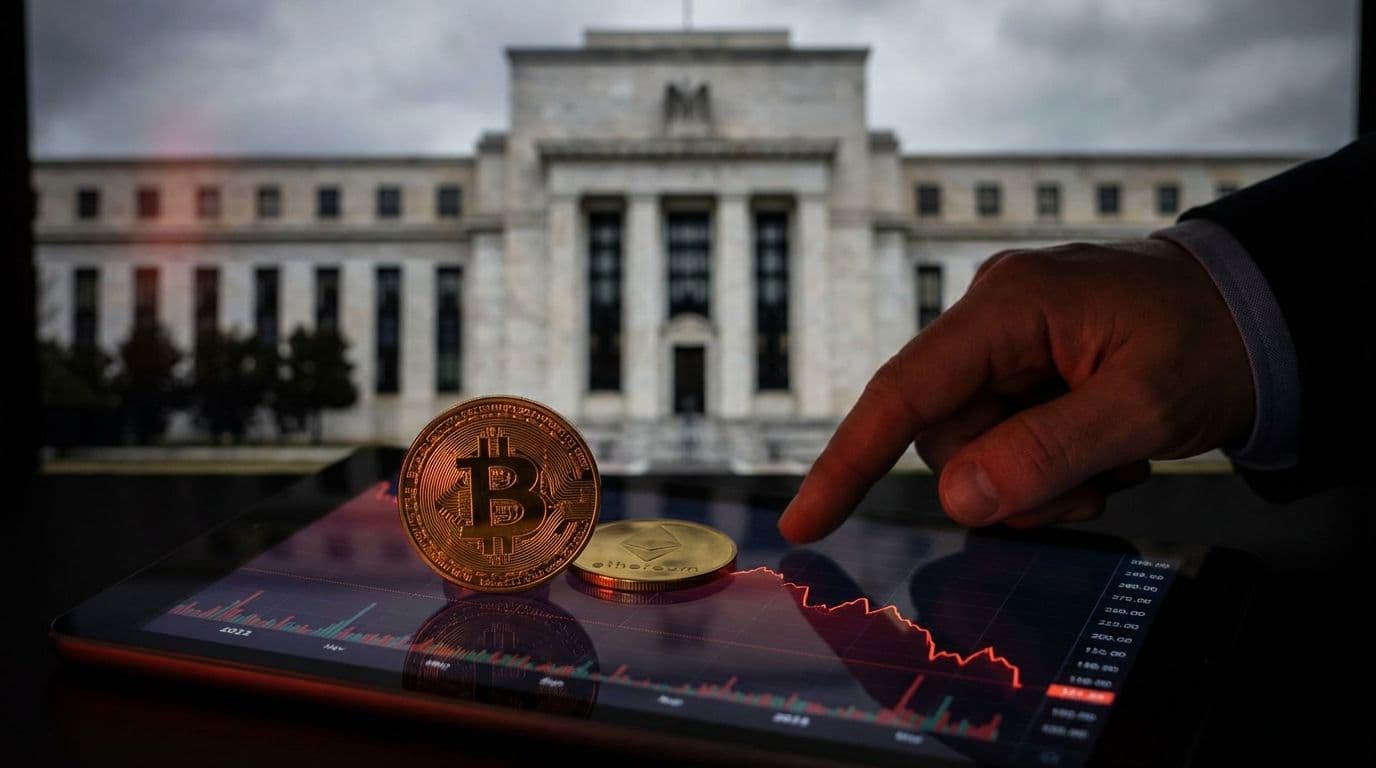
Crypto Market Volatility Persists Following Federal Reserve Decision
The cryptocurrency market experienced a downturn today, fueled by a confluence of factors including the widely anticipated Federal Reserve interest rate hold, ongoing geopolitical uncertainties, and a notable shift towards traditional safe haven assets. Major digital assets saw declines, reflecting a broader sentiment of caution among experienced traders. This market activity underscores the complex interplay of macroeconomic influences and risk appetite within the digital asset space.
Bitcoin price, the dominant cryptocurrency, registered a noticeable decrease, further impacting the altcoin market. This downward pressure suggests a prevailing risk-off stance, potentially driven by anxieties surrounding global economic stability. Traders are closely monitoring trading volumes and order book dynamics, seeking to gauge the depth of the sell-off and identify potential support levels. The derivatives market is providing key insights. Futures contracts on major exchanges are displaying a bearish bias, with open interest decreasing and funding rates turning negative. This indicates that a significant portion of the market is positioning itself for further price depreciation, a critical signal for those involved in leveraged trading strategies.
The impact extended beyond Bitcoin. Ethereum, the second largest cryptocurrency by market capitalization, also experienced a decline. The altcoin market in general mirrored this trend, as tokens across various sectors, including decentralized finance (DeFi) and layer-2 scaling solutions, faced downward pressure. Traders are now keenly watching key technical indicators for potential entry points or the possibility of further downside. The Relative Strength Index (RSI) on several leading cryptocurrencies has begun to approach oversold territory, which could indicate a potential rebound.
Geopolitical developments continue to weigh heavily on investor sentiment. Uncertainty stemming from international conflicts and their potential ramifications on global supply chains and economic stability have prompted a flight towards less risky assets, including traditional gold and government bonds. This movement inevitably impacts the cryptocurrency market, which is still considered a high risk asset class by many institutional investors.
The market’s reaction to the Federal Reserve’s decision to maintain interest rates, while widely expected, highlights the sensitivity of the cryptocurrency market to broader economic signals. Even a predictable outcome can trigger volatility as traders recalibrate their positions based on future expectations. The focus is now shifting to upcoming economic data releases, including inflation figures and employment reports, which will provide further clues about the Federal Reserve's future monetary policy trajectory.
Experienced traders are actively analyzing on-chain metrics, such as transaction volumes and the movement of Bitcoin from exchanges to cold storage, to gain a deeper understanding of market participants’ behavior. These insights, combined with technical analysis of price charts and an understanding of the derivatives market dynamics, will be crucial in navigating the ongoing market volatility. The current landscape highlights the importance of risk management strategies and the need for traders to remain vigilant and adaptable to the evolving market conditions within the cryptocurrency ecosystem.
⚡Trading Benefits
20% CashbackLifetime cashback on all your trades.
- 20% fees back — on every trade
- Paid out directly by the exchange
- Set up in 2 minutes
Affiliate links · No extra cost to you
20%
Cashback
Example savings
$1,000 in fees
→ $200 back
Disclaimer
This article is for informational purposes only. The content does not constitute financial advice, investment recommendation, or solicitation to buy or sell securities or cryptocurrencies. Biturai assumes no liability for the accuracy, completeness, or timeliness of the information. Investment decisions should always be made based on your own research and considering your personal financial situation.