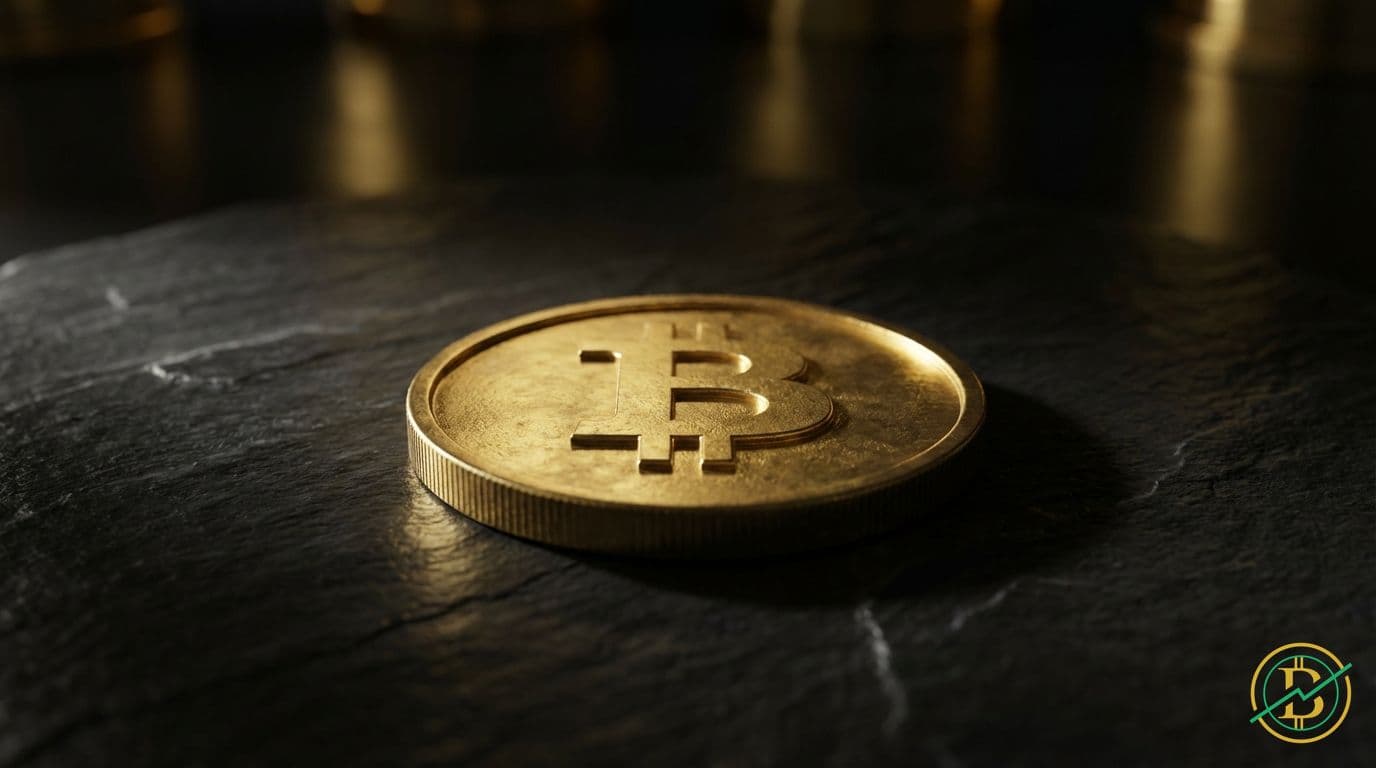
Bitcoin's Circulating Supply Tightens Signaling Potential Price Volatility
Key Insights
- →Over 95% of Bitcoin's total supply is in circulation, nearing the 21 million coin cap.
- →Mining rewards are decreasing, increasing the importance of transaction fees for miners.
- →Supply scarcity could lead to increased price volatility as demand fluctuates.
What Happened?
The Bitcoin network is approaching a significant milestone: over 95% of all Bitcoin has entered circulation. This leaves fewer than 1 million BTC remaining to be mined, highlighting the digital asset's increasingly scarce nature. This scarcity is a core tenet of Bitcoin's design, intended to mimic the finite supply of precious metals like gold. The rate at which new Bitcoin enters the market has consistently decreased over time, a process embedded within the network's code. This engineered scarcity is achieved through the Bitcoin halving events.
These halving events, occurring approximately every four years, automatically reduce the block reward given to miners for validating transactions. The most recent halving occurred recently, further diminishing the supply of new Bitcoin entering the market. This reduction in new supply, coupled with consistent demand, is a key factor influencing Bitcoin's price dynamics.
Background
Bitcoin's issuance schedule is a fundamental component of its economic model. The total supply is capped at 21 million coins, a limit established by its pseudonymous creator, Satoshi Nakamoto. The mining process, which secures the Bitcoin network, involves complex computational tasks. Miners are rewarded with newly minted Bitcoin for verifying transactions and adding new blocks to the blockchain. As the network matures, the block reward diminishes through the halving mechanism.
This mechanism ensures that the rate of new Bitcoin creation decreases over time. Initially, miners received 50 BTC per block. The most recent halving reduced this reward to 6.25 BTC. The next halving, programmed into the network, will further decrease this reward. This continuous reduction in the supply of new Bitcoin is a critical factor in understanding the long term Bitcoin value proposition. The increasing scarcity also shifts the economic emphasis for miners toward transaction fees, as block rewards become less significant.
Market Impact
The increasing scarcity of Bitcoin has significant implications for its market behavior. With the vast majority of Bitcoin already in circulation, the influence of new supply on price fluctuations is diminished. This can potentially lead to increased price volatility. Any significant shifts in demand, driven by factors such as institutional investment, regulatory developments, or macroeconomic trends, could have a magnified impact on price.
Furthermore, the changing economics of mining, with a greater reliance on transaction fees, may influence miner behavior. Miners could be incentivized to prioritize transactions with higher fees, potentially impacting transaction confirmation times and network congestion during periods of high activity. Traders should monitor both supply dynamics and network activity to assess potential price movements and adjust their strategies accordingly.
⚡Trading Benefits
20% CashbackLifetime cashback on all your trades.
- 20% fees back — on every trade
- Paid out directly by the exchange
- Set up in 2 minutes
Affiliate links · No extra cost to you
20%
Cashback
Example savings
$1,000 in fees
→ $200 back
Related Articles

Bitcoin Futures Volume Surpasses Altcoins on Binance Signaling Shifting Investor Sentiment

Nvidia CEO Predicts AI Revolution Reshaping Infrastructure and Employment

Bitcoin Showing Resilience: Diminishing Holder Losses Signal a Shift

Bitcoin ETFs See Strong Inflows Demonstrating Sustained Institutional Interest
Disclaimer
This article is for informational purposes only. The content does not constitute financial advice, investment recommendation, or solicitation to buy or sell securities or cryptocurrencies. Biturai assumes no liability for the accuracy, completeness, or timeliness of the information. Investment decisions should always be made based on your own research and considering your personal financial situation.