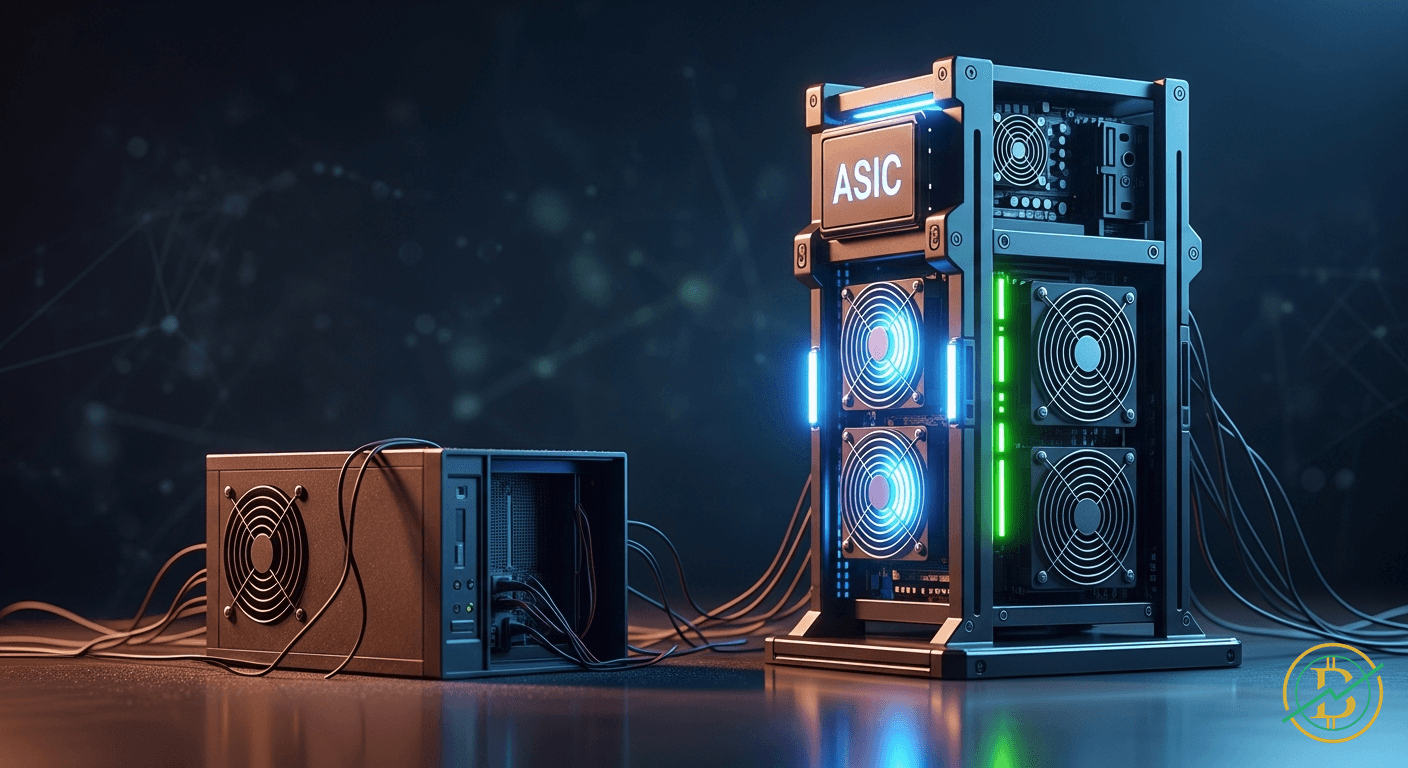
Bitcoin Mining Difficulty and the Future of Home Operations
Key Insights
- →ASIC miners dominate Bitcoin mining, significantly reducing profitability for smaller operations.
- →Mining difficulty continues to increase, demanding more computational power to earn BTC.
- →Home mining is increasingly challenging and requires careful assessment of energy costs.
What Happened?
The landscape of Bitcoin mining has dramatically shifted, especially for individual miners. What was once feasible with a standard personal computer has evolved into an industry dominated by specialized hardware. The rise of Application Specific Integrated Circuit (ASIC) miners has concentrated the hash rate in the hands of large, often institutional, entities. These ASICs are specifically designed for the SHA-256 algorithm that secures the Bitcoin network, offering vastly superior performance and efficiency compared to general purpose hardware like CPUs or GPUs. Consequently, the average individual with a standard PC or even a high end gaming rig finds it incredibly difficult to compete.
Currently, the profitability of Bitcoin mining for individual participants is under pressure. The increasing network difficulty means that solving the cryptographic puzzles required to validate transactions and earn BTC requires significantly more computational power. This, coupled with the high upfront investment in ASICs and the ongoing operational costs, makes it a difficult venture. Many home miners, attracted by the allure of earning SATs, find themselves facing substantial electricity bills with little to no BTC rewards. The shift has effectively marginalized the home mining sector, transforming it into a realm of hobbyists and enthusiasts rather than a reliable source of income.
Background
The evolution of Bitcoin mining mirrors the evolution of the cryptocurrency market itself. In the early days, mining was accessible to anyone with a computer. As the network grew and the value of Bitcoin increased, the mining process became more competitive. This naturally led to the development of more efficient and powerful mining hardware. GPUs offered a performance boost over CPUs, but ASICs ultimately revolutionized the game. ASICs are designed to perform only one task, which allows them to excel at the specific computations involved in Bitcoin mining. The initial barriers to entry were relatively low, allowing a wider range of participants. However, the costs associated with acquiring, operating, and maintaining advanced mining equipment have steadily risen.
The inherent difficulty adjustment mechanism of the Bitcoin protocol, which automatically regulates the difficulty of mining based on the total network hash rate, is another crucial factor. This mechanism ensures that blocks are mined roughly every ten minutes. As more miners join the network, the difficulty increases, requiring even more computing power to solve the same puzzles. As a result, the time required to mine a single block, and the corresponding BTC reward, is often out of reach for a small operation.
Market Impact
The dominance of ASICs and the escalating difficulty levels have significant implications for the market. While Bitcoin's security and decentralized nature are enhanced by the overall hash rate, the concentration of mining power poses a risk. This trend impacts the distribution of BTC and the accessibility of mining. The cost of operations and the specialized equipment needed limit the participation of individual miners.
Ultimately, the market impact points to a future where home mining, in its traditional sense, is increasingly irrelevant. The costs associated with electricity and hardware, combined with the difficulty of competing against large mining farms, make it a challenging endeavor. Potential miners must carefully assess their energy costs, hardware investments, and the current network difficulty before entering the mining arena. The future of Bitcoin mining likely rests with large scale operations, which wield the necessary resources to navigate the complexities of this highly competitive landscape.
⚡Trading Benefits
20% CashbackLifetime cashback on all your trades.
- 20% fees back — on every trade
- Paid out directly by the exchange
- Set up in 2 minutes
Affiliate links · No extra cost to you
20%
Cashback
Example savings
$1,000 in fees
→ $200 back
Related Articles
Significant Bitcoin Accumulation Signals Potential Price Stability
Bitcoin's Role in the Emerging Artificial Intelligence Landscape: A Strategic Assessment

Bitcoin Fortune Battle: UK Man Accuses Wife of Crypto Heist
Bitcoin's Consolidation Phase: Wintermute's Insights on Key Indicators
Disclaimer
This article is for informational purposes only. The content does not constitute financial advice, investment recommendation, or solicitation to buy or sell securities or cryptocurrencies. Biturai assumes no liability for the accuracy, completeness, or timeliness of the information. Investment decisions should always be made based on your own research and considering your personal financial situation.