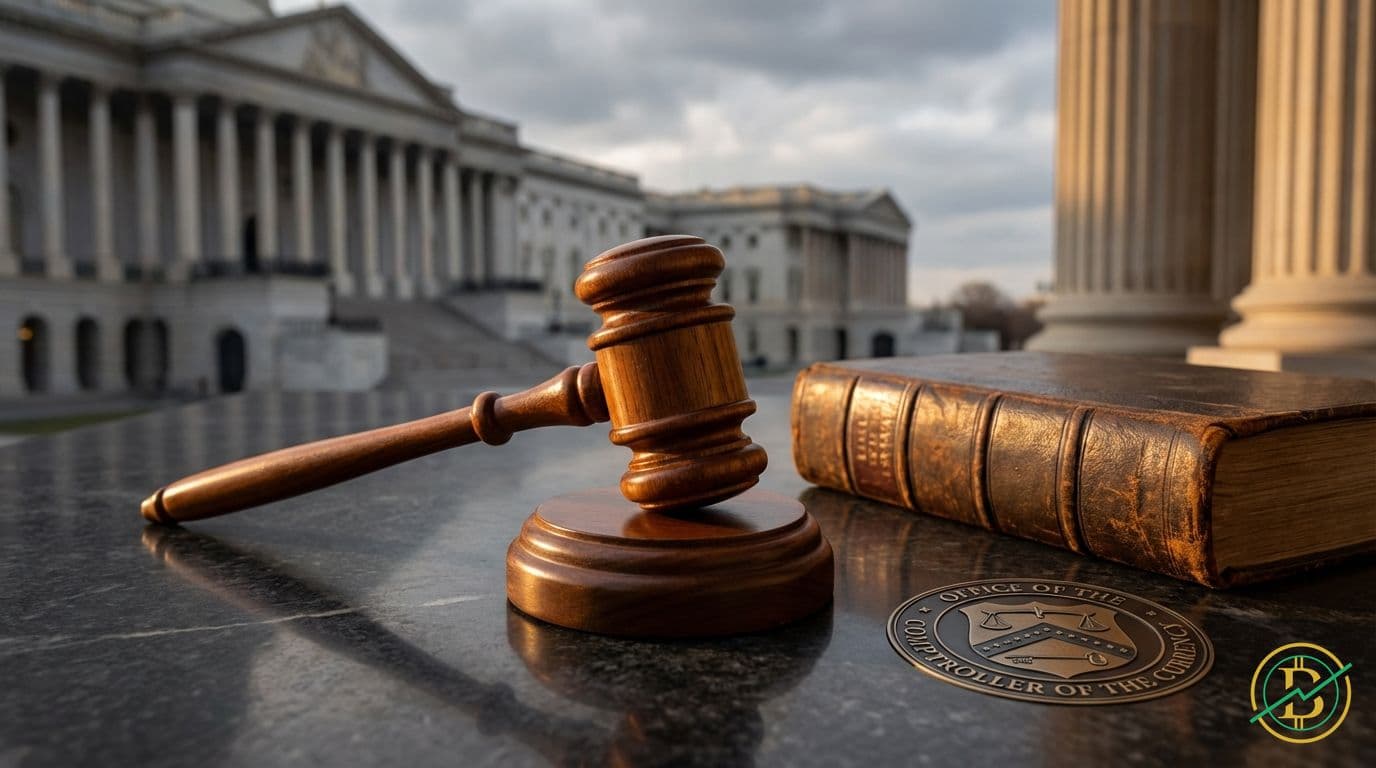
Banking Sector Braces for Potential Legal Clash with OCC Over Crypto Charters
Key Insights
- →US banking lobby mulls lawsuit challenging OCC’s crypto trust bank charter approvals.
- →Concerns revolve around competitive disadvantages and regulatory arbitrage possibilities.
- →Legal action could reshape the landscape for crypto firms seeking federal banking licenses.
What Happened?
A significant US banking lobby is actively considering a lawsuit against the Office of the Comptroller of the Currency (OCC). The potential legal challenge centers on the OCC’s recent decision to grant national trust bank charters to various cryptocurrency firms. While the specific firms targeted by the lobby's concerns remain undisclosed, the core issue revolves around the regulatory framework governing these new crypto-focused institutions. This potential lawsuit signifies a growing tension between traditional financial institutions and the burgeoning digital asset sector. The banking lobby, representing established financial players, is reportedly weighing the legal options, with an unnamed source familiar with the lobby's position confirming the seriousness of their considerations. This could significantly impact the future of institutional access to the broader cryptocurrency market.
The central point of contention appears to be the perceived competitive advantage held by crypto firms operating under these national trust bank charters. Traditional banks feel that these new entrants benefit from potentially less stringent regulatory oversight, creating an uneven playing field. The lobby's concerns also likely extend to the potential for regulatory arbitrage, where crypto firms might seek out charters specifically to exploit perceived loopholes or differing interpretations of financial regulations. The situation highlights the ongoing struggle to define and regulate the intersection of traditional banking and the rapidly evolving crypto world, including the use of Bitcoin (BTC) and other digital assets.
Background
The OCC, a federal agency responsible for regulating and supervising national banks, has taken a proactive stance in addressing the rise of digital assets. The agency has issued guidance and, in some cases, granted charters to firms specializing in cryptocurrency custody and other crypto related services. These actions are part of a broader effort to provide clarity and establish a regulatory pathway for crypto businesses within the existing financial system. These charters allow crypto firms to operate nationwide, offering services like custody of digital assets, which has further fueled the debate over the appropriate regulatory framework for digital assets.
This development follows years of debate regarding the integration of cryptocurrencies within the existing financial system. Traditional banking institutions have been hesitant to embrace crypto, citing concerns about volatility, regulatory uncertainty, and potential risks. The OCC's move to grant charters represents a significant step towards integrating digital assets into the mainstream financial landscape, but it has also triggered a backlash from the established banking sector. The banking lobby's potential lawsuit reflects their concerns about the evolving regulatory landscape and the potential impact on their businesses.
Market Impact
The potential lawsuit could have a ripple effect throughout the crypto industry. A successful challenge by the banking lobby could significantly slow down or even halt the OCC's chartering process for crypto firms. This could create uncertainty for existing crypto businesses and make it more difficult for new entrants to gain access to the federal banking system. The outcome of any legal battle could also influence the approach of other regulatory bodies, shaping the future of crypto regulation in the United States.
For experienced crypto traders, this situation warrants close monitoring. The legal challenge underscores the inherent risks and complexities associated with integrating digital assets into the traditional financial system. Traders should carefully assess the impact of any regulatory changes on the value and trading activity of various cryptocurrencies. Further developments, including the filing of a lawsuit and the courts response, will be crucial in determining the long term trajectory of the crypto market's institutional integration.
⚡Trading Benefits
20% CashbackLifetime cashback on all your trades.
- 20% fees back — on every trade
- Paid out directly by the exchange
- Set up in 2 minutes
Affiliate links · No extra cost to you
20%
Cashback
Example savings
$1,000 in fees
→ $200 back
Related Articles




Disclaimer
This article is for informational purposes only. The content does not constitute financial advice, investment recommendation, or solicitation to buy or sell securities or cryptocurrencies. Biturai assumes no liability for the accuracy, completeness, or timeliness of the information. Investment decisions should always be made based on your own research and considering your personal financial situation.